For Quebec shoppers comparing the 2026 Kia Sportage HEV, cargo space isn’t just a number on a spec sheet. It’s whether your bags, boxes, and gear actually fit the way you expect them to.
The Sportage HEV’s cargo floor moves between two positions, and that choice changes more than you’d think. Before you decide if this crossover fits your routine, it helps to understand what that floor actually does.
What the Adjustable Cargo Floor Is
The Sportage HEV’s rear cargo area has a floor panel that sits in one of two positions: high or low. Behind the second row, cargo volume runs 977 L with the floor in its high setting and 1,119 L with the floor lowered. Behind the front seats, with the rear seats folded, the range spans 1,852 L to 2,087 L, depending on where the panel sits.
That’s not a trim-specific feature carved out for one grade. It’s part of how the cargo area is built, and the difference between the two settings comes down to load height versus vertical room.
How It Actually Works
Raise the floor and it sits closer to the window line, creating a flatter, higher load surface that lines up more evenly with the folded seatbacks. Drop it and the floor sits lower, closer to the vehicle’s actual load floor, opening up more vertical space above it, up toward the roof.
This isn’t a powered or automated system. It’s a manual panel you lift and reposition by hand, which means the choice is yours every time you load the vehicle, not a fixed setting you’re stuck with.
The HEV’s layout carries this cargo structure alongside its 1.6 L turbocharged four-cylinder and 47.7 kW electric motor, a powertrain that still delivers 231 hp combined output while leaving the cargo floor’s high/low mechanism untouched by the electrification hardware underneath.
Why the Two Positions Matter in Real Loading
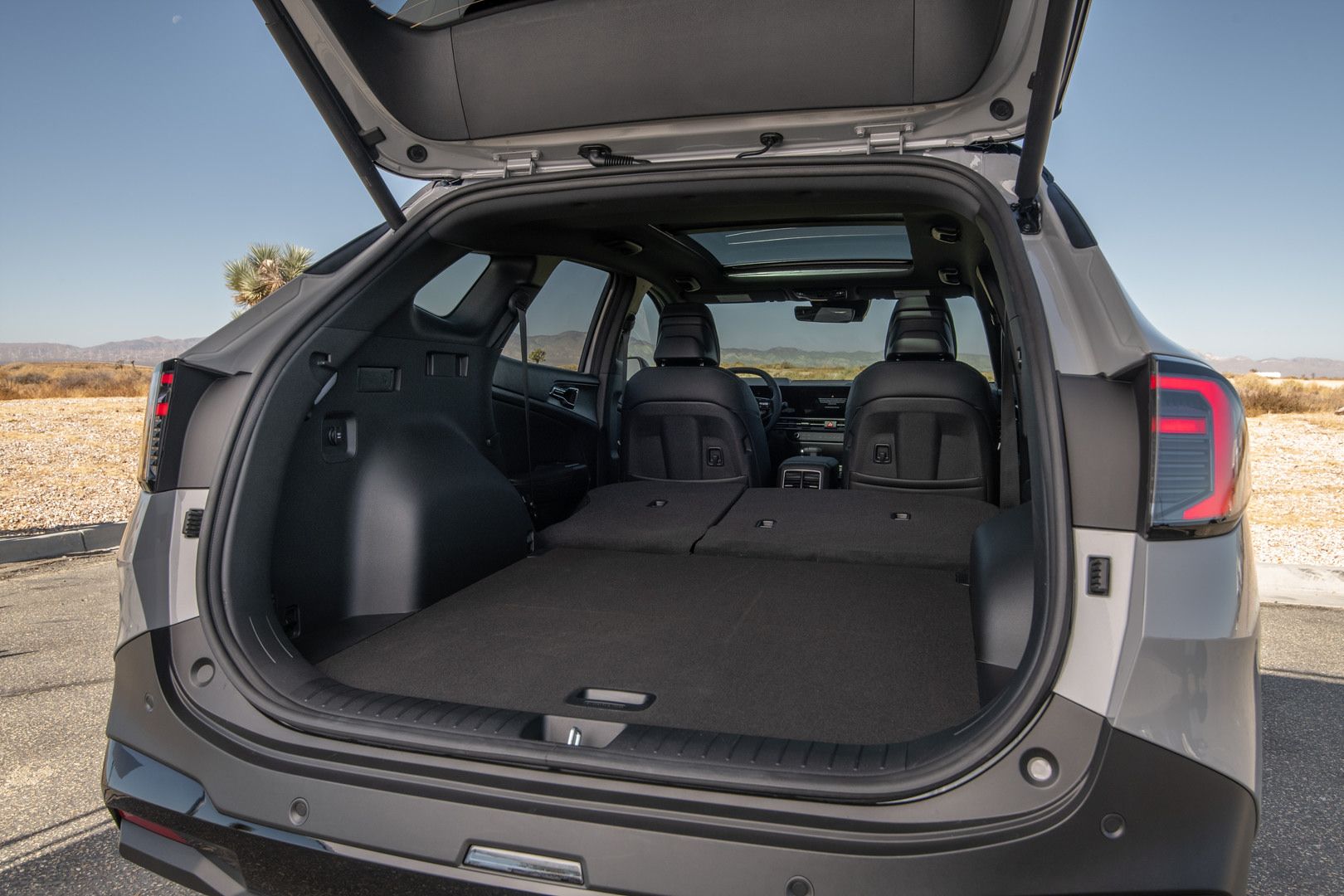
A flat, high floor means less lifting. Groceries, a stroller, or a case of water go in at hip height instead of requiring a deep reach down into a well. The trade-off is less room for anything tall, since the ceiling above the floor is lower in this setting.
Drop the floor and you gain the vertical space that a taller box, a bike with the front wheel on, or a stand-up cooler needs. The trade-off there is a deeper reach to load and unload, and a load surface that isn’t flush with the folded rear seatbacks.
Rear seats up versus folded is the other lever. With the second row up, you’re working within the 977 L to 1,119 L range behind it. Fold the 60:40 split rear seats down and the usable space grows to the 1,852 L to 2,087 L range behind the front seats, opening the cargo area into one continuous load floor.
|
Configuration
|
Cargo Volume
|
|
Behind rear seats, floor high
|
977 L
|
|
Behind rear seats, floor low
|
1,119 L
|
|
Behind front seats (seats folded), floor high
|
1,852 L
|
|
Behind front seats (seats folded), floor low
|
2,087 L
|
Who Gets the Most Out of This
A family loading strollers, sports gear, and grocery hauls in the same week benefits from switching between settings rather than living with one fixed layout. The high position handles the day-to-day stuff at a manageable reach; the low position opens up for the one bulky item that doesn’t fit standing height.
Road-trippers packing duffel bags and a cooler get more from the low position’s vertical room, since soft-sided luggage stacks easily and doesn’t need a flat surface. Anyone hauling flatter, wider loads, like flat-pack furniture or bins, gets more use from the high setting’s even load surface.
The Sportage HEV’s AWD is standard across the lineup, which matters for anyone loading gear before a drive on wet or snow-covered roads through the seasons in Quebec. Ground clearance sits at 210 mm, giving the loaded vehicle a bit of margin when the pavement turns rough.
Seeing the Cargo Floor in Person
The adjustable cargo floor is a small mechanical detail, but it shapes how the 2026 Sportage HEV handles everything from a Costco run to a weekend away. Both floor positions trade load height against vertical room, and the right one depends on what you’re actually hauling that day.
Visit Lallier Kia Vimont in Laval to test the floor’s high and low positions yourself, load it with the items you actually carry, and see how the space works with the rear seats up and folded.
To learn more about the 2027 Kia Sportage HEV, visit Kia.ca