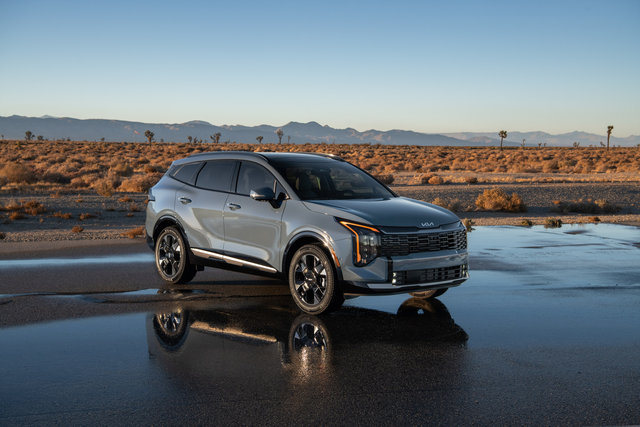
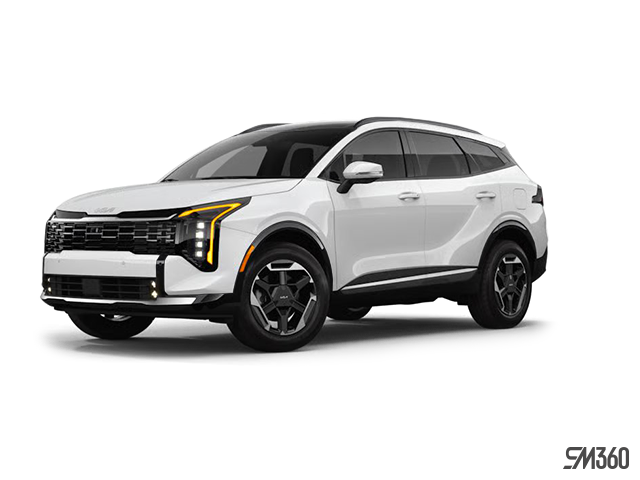
The 2026 Kia Sportage HEV and 2026 Kia Sorento HEV share identical hybrid powertrains but serve entirely different purposes. The Sportage HEV positions itself as the spirited, tech-forward compact for drivers who prioritize agility and modern design, while the Sorento HEV expands the formula to accommodate three-row family needs. Both deploy the same 1.6-litre turbo-hybrid system - one optimized for dynamic handling in a smaller footprint, the other calibrated for maximum passenger and cargo flexibility.
Side-by-Side: Where the Shared Powertrain Diverges
|
Feature
|
Sportage HEV
|
Sorento HEV
|
|
Horsepower
|
231 hp
|
227 hp
|
|
Fuel Economy (Combined)
|
6.7 L/100km
|
7.0 L/100km
|
|
Cargo Volume
|
1,119 L
|
357 - 2,139 L
|
|
Seating Capacity
|
5 passengers
|
6 passengers
|
|
Towing Capacity
|
2,000 lb (907 kg)
|
1,653 - 2,000 lb (750 - 907 kg)
|
The Shared Foundation: 1.6L Turbo-Hybrid Architecture
Both vehicles deploy Kia's 1.6-litre turbocharged gasoline direct injection engine paired with a 47.7 kW permanent magnet synchronous motor. The Sportage HEV generates 231 horsepower through this combination, while the Sorento HEV produces 227 hp and 258 lb-ft of torque. The four-horsepower difference reflects calibration priorities - the Sportage tuned for sharper throttle response in urban environments, the Sorento optimized for smoother power delivery under heavier loads.
Both route power through a 6-speed automatic transmission to standard all-wheel drive. The Sorento HEV features Drive Mode Select, allowing drivers to adjust powertrain responsiveness across multiple scenarios. Neither vehicle sacrifices AWD capability - the distinction lies in how each applies that capability to its intended mission.
6.7 vs 7.0 L/100km: The Efficiency Trade-Off
The Sportage HEV achieves 6.7 L/100km combined, a 0.3 L/100km advantage over the Sorento HEV's 7.0 L/100km rating. For drivers covering 20,000 km annually through Quebec's mixed urban and autoroute conditions, the Sportage saves approximately 60 litres per year - meaningful for commuters prioritizing operating costs. The Sorento HEV's slightly higher consumption reflects its additional mass and aerodynamic profile, necessary trade-offs for three-row capability.
The Sorento HEV delivers 7.2 L/100km city and 6.7 L/100km highway, showing stronger efficiency at sustained speeds. The Sportage HEV's combined figure suggests more consistent performance across driving conditions, particularly valuable for Montreal-area drivers alternating between stop-and-go traffic and Highway 40 stretches. Both vehicles eliminate range anxiety inherent to plug-in hybrids - no charging infrastructure required, just conventional refuelling.
Compact Agility vs Three-Row Flexibility
The Sportage HEV's 1,119 litres of cargo volume suits couples, small families, and urban professionals who prioritize manoeuvrability over maximum hauling. The dual-level cargo floor allows configuration adjustments without sacrificing rear legroom - the Sportage offers 1,050 mm of rear seat space, competitive within the compact crossover segment. This configuration works for weekend Laurentians trips, Costco runs, and airport parking scenarios where tight spaces favour smaller dimensions.
The Sorento HEV counters with 357 litres behind the third row, expanding to 2,139 litres with all rear seats folded. That range covers everything from six-passenger family transport to full home renovation supply hauls. Families managing car seats, strollers, sports equipment, and weekly groceries simultaneously will find the Sorento's expandable volume essential. The Sportage serves the driver who rarely needs that maximum capacity - and prefers not to manoeuvre a larger vehicle through downtown Laval when they don't.
Technology Standard vs Technology Optional
The Sportage HEV includes dual 12.3-inch panoramic displays as standard equipment across all trims, starting with EX HEV. Wireless Apple CarPlay and Android Auto integration eliminates cable clutter, while the 10-inch head-up display projects speed, navigation, and driver assistance alerts directly into the sightline. Kia Connect with over-the-air software updates ensures the system remains current without dealership visits.
The Sorento HEV matches the 12.3-inch multimedia interface and instrument cluster but reserves the Bose premium audio system for SX trim. Both vehicles offer wireless phone charging and comprehensive smartphone integration. The Sportage positions its technology suite as standard equipment rather than trim-dependent upgrades - a distinction that matters for buyers who want full connectivity without stepping up to higher trim levels.
Design Language: Stacked LEDs vs Traditional Presence
The Sportage HEV's stacked LED headlight design and Amber LED Star Map daytime running lights create immediate visual differentiation. The two-spoke steering wheel and LED star map interior lighting extend that design language into the cabin. The gloss black roof rack adds functionality without compromising the aerodynamic profile. This approach targets drivers who view their vehicle as an extension of personal style - the Sportage reads as modern and tech-forward before you open the door.
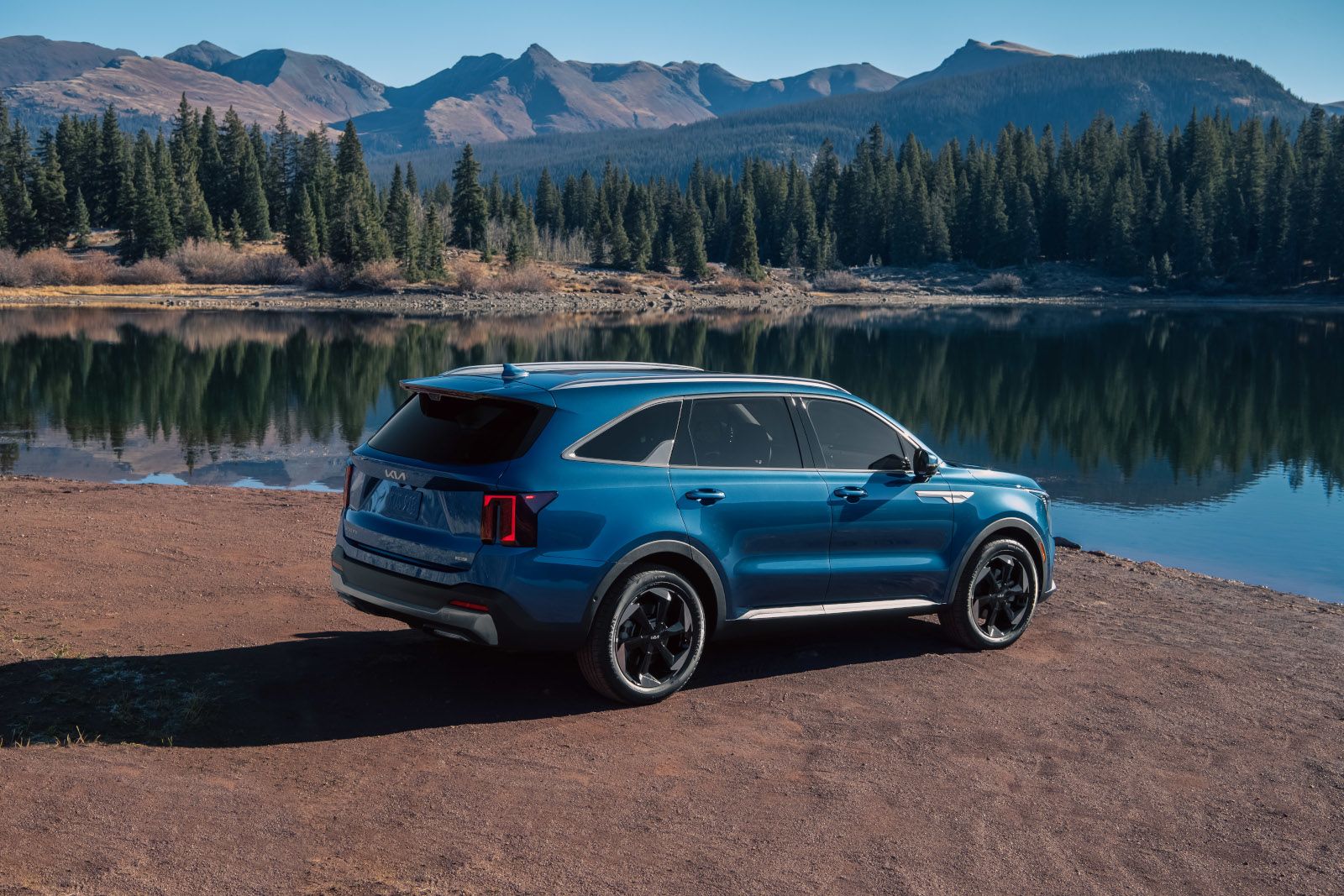
The Sorento HEV adopts more traditional three-row SUV proportions with LED projection headlights and available panoramic sunroof. The gloss black grille and chrome skid plate accents on SX trim communicate family-friendly refinement rather than compact sportiness. Neither approach is superior - they serve different buyer priorities. The Sportage wins attention in urban parking lots; the Sorento projects the capability families expect from a three-row hauler.
Towing: 2,000 lb Across Both Platforms
Both vehicles handle 2,000 lb (907 kg) of trailer weight when properly equipped, sufficient for small utility trailers, jet skis, or lightweight campers. The Sorento HEV's base configuration starts at 1,653 lb (750 kg), increasing to the full 2,000 lb rating with available towing packages. The Sportage HEV's 2,000 lb (907 kg) rating remains consistent across trims, simplifying the decision for buyers who need occasional towing without three-row seating.
Quebec drivers towing through Gatineau Park or transporting recreational equipment to Tremblant will find either vehicle capable. The distinction lies in what you're towing behind - families hauling gear for six passengers may need the Sorento's larger platform, while couples with a single kayak trailer benefit from the Sportage's more compact footprint at the campsite.
Safety Systems: Forward Collision Avoidance Across the Lineup
Both vehicles deploy Forward Collision Avoidance Assist 2 with direct oncoming detection and avoidance capability. The Sportage HEV includes Highway Drive Assist 2, Lane Keep Assist with Lane Departure Warning, and front, side, and rear parking distance warning. The Sorento HEV matches HDA 2 and adds Surround View Monitor for low-speed manoeuvring confidence.
The Sportage's HD rear vision camera and Teen Driver mode with Buckle to Drive enforcement appeal to families with new drivers. The Sorento counters with nine airbags and rear occupant alert with sensor - critical for parents managing multiple children across three rows. Both vehicles meet modern active safety expectations; the Sorento adds features specific to three-row family transport scenarios.
The Verdict: Right-Size Your Hybrid Mission
The 2026 Kia Sportage HEV wins for Montreal-area professionals, couples, and small families who prioritize fuel efficiency, modern design, and urban manoeuvrability over maximum passenger capacity. The 6.7 L/100km combined rating, $41,245 starting price, and standard dual 12.3-inch displays deliver spirited hybrid performance without three-row bulk. Drivers who rarely fill a third row - or prefer not to park a larger vehicle in downtown Laval - gain tangible daily benefits from the Sportage's compact footprint.
The Sorento HEV serves growing families who need six-passenger seating and 2,139 litres of maximum cargo flexibility. While the 7.0 L/100km combined figure trails the Sportage by 0.3 L/100km, the expandable interior justifies that trade-off for buyers managing car seats, strollers, and weekend gear simultaneously.
To learn more about the 2026 Kia Sorento HEV, visit Kia.ca